About Us
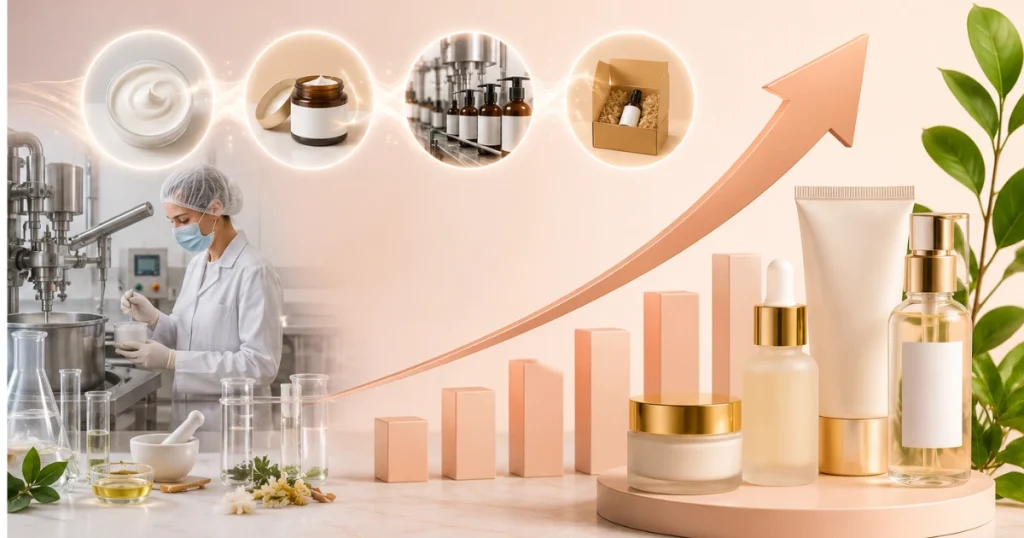
Did you look at the latest statistics about the beauty industry? They are humongous, I must say!
The cosmetic industry alone is expected to record revenues worth about $417 billion by the year 2030, while the entire beauty industry market is expected to be valued at around $937 billion.
They usually know what product they want to create, what kind of image they want their brand to project, and who their target market is.
The one thing that they may lack, however, is the means by which to produce these things. This is where contract manufacturing comes into play.
This article covers how the model works, what it does for beauty brands at every stage of growth, and what to look for when you are ready to find the right manufacturing partner.
What is Contract Manufacturing in the Beauty Industry?
Contract manufacturing is when a brand partners with an external facility, like Cozy Biocare, to handle the production of its products.
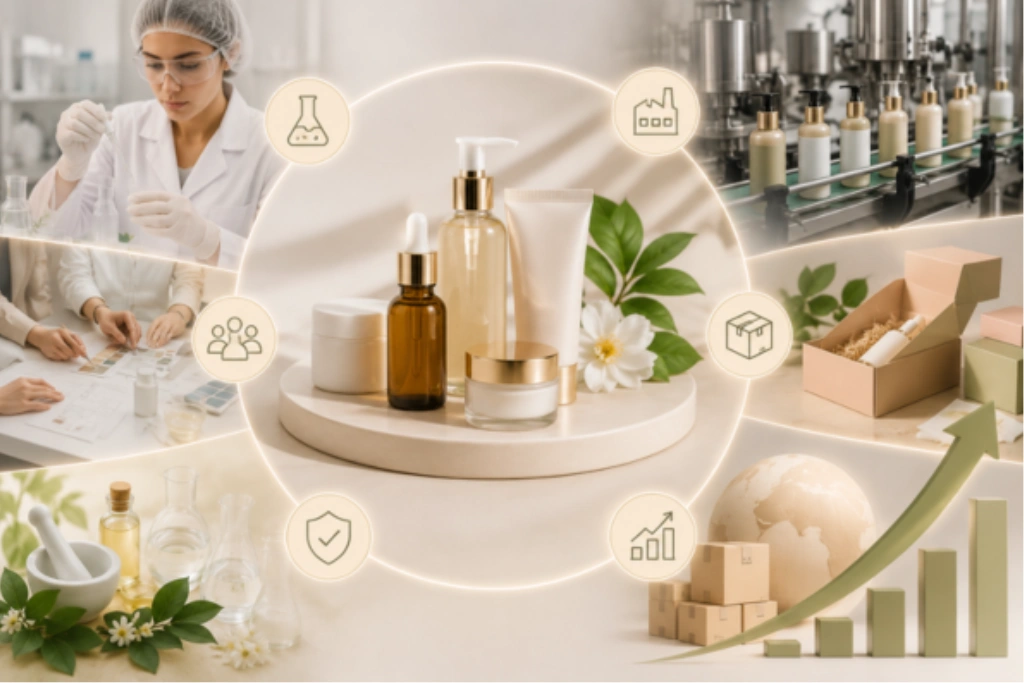
The cosmetic manufacturer takes care of formulation, ingredient sourcing, production, testing, and packaging. Whereas the brand focuses on building its identity, marketing its products, and reaching its customers.
It is a different model from a private-label skincare manufacturer, where brands pick from ready-made formulas and put their names on them.
Contract manufacturing goes further than that. It gives new brands the ability to develop formulas personalized to their specific vision, ingredient preferences, and market positioning.
How Do Beauty Brands Benefit from Contract Manufacturing?
The reasons brands choose to work with contract manufacturing firms go beyond just saving on production costs.
Here is a closer look at what the model genuinely delivers.
Faster Market Entry Without the Infrastructure Cost
Setting up a cosmetic production facility from scratch is expensive and time-consuming. Equipment, lab space, qualified staff, compliance approvals, it adds up fast and takes years to get right.
Brands that choose to work with experienced cosmetic manufacturers will not have to go through any of those problems, as they will get the benefit of having a complete system of manufacturing right from the start.
Access to Expertise and Ready Formulations
The right formula is the core of any product. It is a science to get the texture, stability, efficacy, and ingredient compatibility right. It also means that it requires years of hands-on experience to do that.
Luckily, an established contract manufacturing facility will have the experience required. Not only do they have experience working with many different kinds of products, but they also have an understanding of how different ingredients behave and work together.
Scalability That Grows With Your Brand
A brand launching its first product line does not need the same production capacity as one that has been in the market for five years.
Contract manufacturing gives brands the flexibility to start at a volume that makes sense for their stage and scale up as demand grows.
They can do this without switching partners or rebuilding their supply chain.
Quality and Compliance Built In
Regulatory compliance is one of the most complex parts of launching a beauty product.
Each market has its own specifications, and failure to understand this can be detrimental to the brand’s reputation and distribution.
Working together with an authorized contract manufacturer will ensure that everything will be compliant from the very start of manufacturing.
Cost Efficiency from Day One
Owning a production facility means carrying fixed costs regardless of how much you produce. Contract manufacturing turns that into a variable cost.
Brands pay for what they produce and scale their spend as their revenue grows.
It also gives brands access to supplier relationships and raw material pricing that would take years to build independently.
How Can Cizy Biocare Help Your Beauty Brand Grow?
We have been working with brand owners, entrepreneurs, and established cosmetic businesses since 1997. In the past many years, over 200 brands have trusted us to manufacture their products. In fact, that number keeps growing because we treat every partnership as a long-term relationship, not a one-time transaction.
What we bring to the table:
- A formulation library of over 100 approved products across skincare, haircare, baby care, oral care, and herbal and Ayurvedic categories, so brands have a strong starting point regardless of the product they want to launch.
- GMP, FDA, and Ayush certifications that open doors to regulated markets without putting the compliance burden on the brand.
- An excess of 15 lakh production capacity a month, which makes us capable of supporting brands that may be at an initial launch stage or growing rapidly.
- A team that has been involved in learning about the needs of cosmetic manufacturing companies for close to three decades.
If you are building a beauty brand and want a contract manufacturing partner who understands the industry from the inside, we would be glad to have that conversation.
Final Thoughts
Contract manufacturing gives beauty brands the infrastructure, expertise, and compliance support they need to grow without the cost and complexity of building it themselves.
The right contract manufacturing partner does not just take care of production. Instead, they become a core part of how your brand scales. If you are ready to take that step, we are here to help you get started.
Frequently Asked Questions
Q1. What is the difference between contract manufacturing and private label?
A private label skincare manufacturer provides pre-formulated products that the brands can market under their own names. In contract manufacturing, the formulation is customized according to the brand’s specifications.
Q2. Do I need my own formula to work with a contract manufacturer?
No. Experienced cosmetic manufacturers like us have existing formulations brands can start from, and we also develop custom formulas based on a brand’s specific brief and market needs.
Q3. What certifications should a cosmetic manufacturer have?
GMP and FDA certifications are the baseline for any serious cosmetic manufacturer. If you plan to enter the Ayurvedic or herbal segment, an Ayush certification adds credibility and opens regulated distribution channels.
Q4. How long does it take to launch a product through contract manufacturing?
It depends on whether you are starting from an existing formulation or developing a custom one. Existing formulations move faster. Custom development takes longer but gives the brand a more differentiated product.
Q5. Can small or new brands work with contract manufacturers?
Yes. Many cosmetic manufacturers work with brands at different stages, from first-time launches to established names scaling their range. The key is finding a partner whose minimum order quantities and production capacity match where your brand currently is.
 6 mins read