About Us
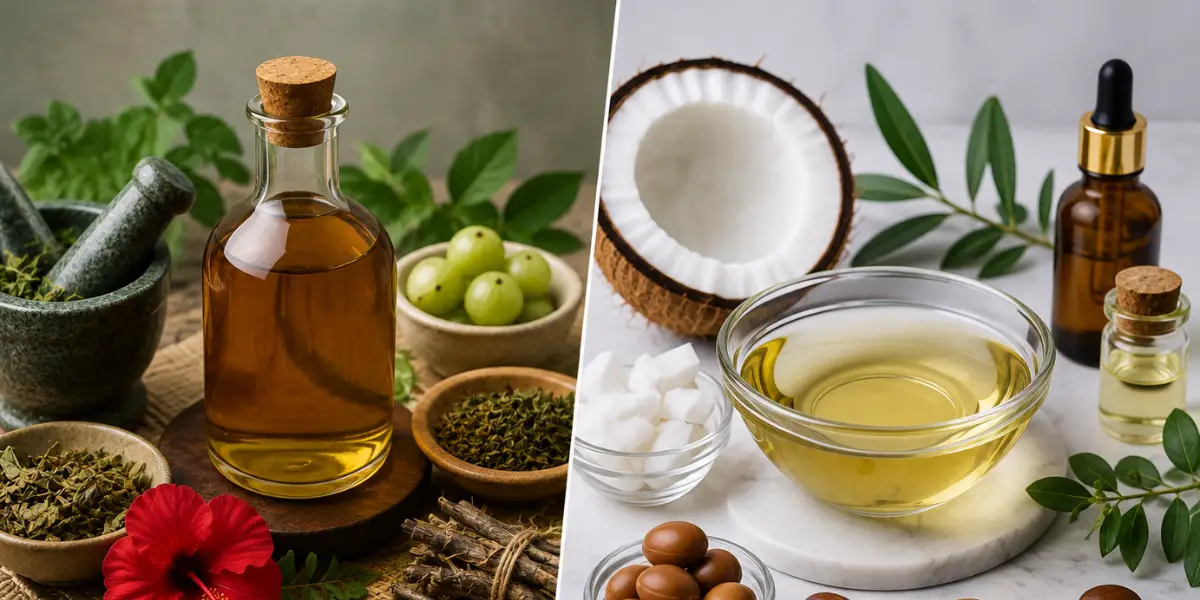
Hair oil is no longer just coconut oil sitting on a bathroom shelf. Today, you can choose from bhringraj blends, amla oils, argan oils, almond oils, herbal infusions, and several other formulas.
That variety sounds useful. But it also creates one obvious question: which type of hair oil is actually better?
At Cizy Biocare, we work with brands developing both Ayurvedic and natural hair care formulations. As one of the cosmetic manufacturers in Chandigarh, we see how differently these oils can be formulated.
The real comparison between Ayurvedic oils vs other natural hair oils comes down to ingredients, formulation methods, hair goals, and product quality.
Let us break those differences down.
What Makes a Hair Oil Ayurvedic?
An Ayurvedic hair oil generally consists of traditional herbs along with the correct carrier oil. It is not about adding a single herb and making a claim that it is an Ayurvedic hair oil.
A combination of herbs can be done using different traditional techniques like extraction or infusion, among others.
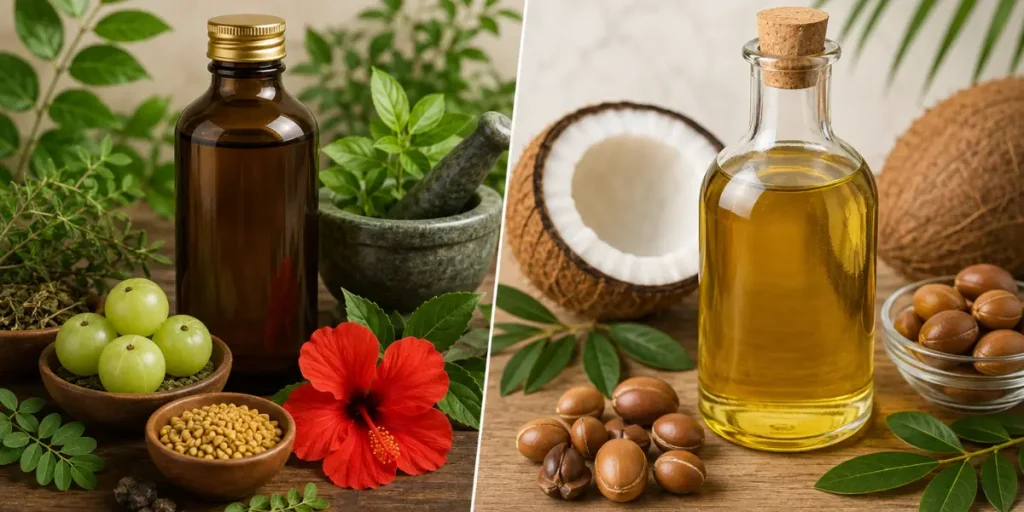
Some Popular Ayurvedic Ingredients include:
- Amla
- Bhringraj
- Brahmi
- Neem
- Hibiscus
- Fenugreek
Interestingly, ingredient selection is only the beginning point for other Ayurvedic cosmetic manufacturers and us. The herbs, carrier oils, ratios, processing method, and final product stability all influence the formulation.
So, an Ayurvedic oil is better understood as a formulated botanical system rather than simply another natural oil with an Ayurvedic ingredient added.
What Are Other Natural Hair Oils?
Natural hair oils are usually made with plant-based oils that are known for conditioning and nourishing the hair. Depending on the product, they may contain a single oil or a blend of several oils.
Some of the most commonly used natural hair oils include:
- Coconut oil
- Almond oil
- Sesame oil
- Castor oil
- Argan oil
- Jojoba oil
Each oil brings its own characteristics to a formulation. For example, argan and jojoba oils are often chosen for lightweight hair serums, while coconut and castor oils are commonly used in richer hair oil blends.
As opposed to Ayurvedic oils, these products are based on the characteristics of the oil itself instead of the traditional blend of herbs and ingredients used in Ayurvedic oils.
It gives us the first and most basic difference between Ayurvedic Oils vs Other Natural Hair Oils:
Natural relates to the origin of the ingredient, while Ayurvedic is related to the traditional process of selection and blending of the ingredients.
Experienced cosmetic manufacturers can go either way depending on the product their brand needs to develop.
Ayurvedic Oils vs Other Natural Hair Oils: What Really Changes?
Both can have a place in a good hair care routine. But they do not always provide the same formulation experience.
The better option depends on what you want the oil to do.
1. The Ingredient Approach Is Different
Ayurvedic hair oils usually incorporate various plant ingredients in one blend.
For instance, the same brand will use amla oil mixed with bhringraj and brahmi instead of focusing on just one superstar oil. These popular Ayurvedic ingredients will then be added to coconut oil, sesame oil, or any other base oil that will do.
Some natural oils may be much simpler and include only almond, argan, coconut, or jojoba oil.
Neither method is automatically superior.
For Ayurvedic cosmetic manufacturers, however, the challenge is usually more complex. They must consider how several botanical materials behave together.
That includes the extract type, carrier system, stability, texture, and intended use. Good cosmetic manufacturers therefore look beyond ingredient popularity before finalizing any hair oil formula.
2. Ayurvedic Formulations Can Be More Layered
Mixing three natural oils together is relatively straightforward. Developing a well-balanced Ayurvedic oil can involve more decisions.
The formulation may include:
- carrier oils
- herbal extracts
- traditional botanicals
- fragrance components
- antioxidants
- supporting ingredients
But more ingredients do not automatically create a better product.
Actually, every addition should have a purpose. The end oil must be stable, usable, and suitable for the audience it will reach.
This is where the role of an experienced Ayurvedic cosmetics manufacturer comes in handy. They will help brands balance their traditional ingredients with the need to formulate modernly.
Cizy Biocare offers manufacturing services of Ayurvedic oils and other cosmetic products, along with the controlled storage of ingredients and batch traceability through the manufacturing process.
3. Your Hair Goal Should Guide the Choice
So, should you immediately pick the Ayurvedic bottle?
Not necessarily.
Start with what your hair actually needs.
A multi-herb Ayurvedic oil may suit someone looking for a more traditional botanical hair care routine. Depending on the formulation, it may focus on scalp nourishment, dryness, breakage, or overall hair conditioning.
Other natural oils can be equally useful for simpler goals.
For example, you may choose:
- Argan oil for a lighter finishing feel
- Coconut oil for pre-wash oiling
- almond oil for conditioning
- Jojoba oil for a lighter, scalp-friendly texture
This is why cosmetic manufacturers first define the product goal before choosing ingredients.
The debate around Ayurvedic oils vs other natural hair oils makes much more sense when you compare purpose, not labels.
4. Texture Can Completely Change the Experience
Have you ever purchased a hair oil that was loaded with some great components, but discontinued its use due to the fact that it was too greasy?
Well, this is a formulation problem that you should pay attention to.
There are some Ayurvedic oils that may be very rich, owing to the components used for their preparation. But then again, an Ayurvedic formula need not necessarily be rich.
There are other natural oils, which differ greatly from one another. For instance, castor oil is very much unlike argan or jojoba oil.
So, cosmetic manufacturers have to think about more than ingredient benefits. They must also consider:
- spreadability
- absorption feel
- greasiness
- fragrance
- wash-off experience
- target hair type
Good Ayurvedic cosmetic manufacturers can adjust the base while keeping the intended botanical positioning intact.
That balance often decides whether customers use a product once or keep returning to it.
5. Manufacturing Quality Matters More Than the Label
That’s where most of the comparisons get too easy.
“Natural” doesn’t necessarily mean good quality. Neither does “Ayurvedic.”
It all comes down to how well the manufacturer takes care of the ingredients and the process.
Some things brands need to consider are:
- ingredient selection
- storage of raw materials
- stability of formula
- microbiological safety
- consistency of batches
- testing of quality
- compatibility of packaging
That’s because selecting the right cosmetic manufacturers is as important as selecting the type of oil.
For brands searching for cosmetic manufacturers in Chandigarh, Cizy Biocare combines Ayurvedic and cosmetic manufacturing with in-house R&D, lab testing, sampling, production, packaging support, and final quality checks.
The formula gets the attention, but manufacturing decides how consistently that formula reaches the customer.
Ayurvedic Does Not Mean “Chemical-Free”
The first misconception about Ayurvedic products is that they do not have any chemicals. This assumption about the nature of cosmetics is incorrect.
All the constituents used for cosmetic preparation, be they natural or synthetic, are composed of chemicals. Water, coconut oil, amla, and bhringraj all consist of chemical compounds.
So, the real comparison in Ayurvedic vs chemical-based products is not about “chemicals” versus “no chemicals.” Instead, it is about choosing the right ingredients for the right purpose and using them safely.
A well-formulated product should always focus on:
- Safe and suitable ingredients
- The right ingredient balance
- Product quality and stability
- Consistent performance
That is why experienced Ayurvedic cosmetic manufacturers focus on building safe, effective formulations instead of relying on marketing terms alone.
Which Is Better: Ayurvedic Oils or Other Natural Hair Oils?
Now we can answer the original question.
Neither wins every time.
| Ayurvedic Oils May Suit You If… | Other Natural Oils May Suit You If… |
| You prefer multi-herb formulations. | You prefer simpler oil blends. |
| Traditional botanicals matter to you. | You want focused conditioning. |
| You enjoy richer oiling routines. | You prefer lightweight daily use. |
| You want a concern-led botanical formula. | You want a single hero oil. |
So, “Ayurvedic oils vs other natural hair oils” is not a war between good and bad, actually. Your hair type, your scalp condition, and personal preference for texture and desired effect play a more important role.
This applies to brands too. Competent cosmetic producers know the client and the aim behind the product before creating an ingredients story.
Build the Right Hair Oil With Cizy Biocare
The right hair oil depends on the right formulation. Each and every component used, every production choice made, and every quality control measure taken makes an impact.
At Cizy Biocare, we help brands bring those ideas to life as experienced Ayurvedic cosmetic manufacturers and trusted cosmetic manufacturers in Chandigarh. Our manufacturing capabilities include:
- 100+ approved cosmetic formulations
- Licensed manufacturing facility
- In-house R&D and quality testing laboratory
- Custom formulation development
- Complete manufacturing and packaging support
- Private label, third-party, and contract manufacturing
Our goal is simple. We help you build hair care products that combine thoughtful formulation, reliable quality, and market-ready manufacturing under one roof.
The Bottom Line
Ayurvedic oils contain natural herbs and have more complex formulations possible. Other natural oils for hair provide a simple, concentrated conditioner and are easy to use.
Therefore, there is no absolute winner in Ayurvedic Oils vs. Other Natural Hair Oils.
It all depends on the formulation of the better product to achieve a specific goal.
For brands, that makes the choice of Ayurvedic cosmetic manufacturers equally important. The ingredients start the story, but formulation expertise and manufacturing quality determine how well the finished product delivers on it.
Frequently Asked Questions
1. What is the difference between Ayurvedic oils and other natural hair oils?
Ayurvedic oils are formulated using traditional herbs and Ayurvedic principles. Other natural hair oils usually rely on one or more plant-based oils for conditioning and nourishment. The better choice depends on your formulation goals, target audience, and intended product positioning.
2. Can cosmetic manufacturers develop both Ayurvedic and natural hair oils?
Yes. Experienced cosmetic manufacturers often develop both Ayurvedic and natural hair oil formulations. Depending on your brand requirements, they can create custom formulations, recommend suitable ingredients, and support manufacturing, testing, packaging, and product scale-up under one roof.
3. What ingredients are commonly used in Ayurvedic hair oils?
Some of the most popular Ayurvedic ingredients include amla, bhringraj, brahmi, neem, hibiscus, and fenugreek. Ayurvedic cosmetic manufacturers may combine these herbs with suitable carrier oils to create formulations designed for different hair care needs.
4. How do I choose the right Ayurvedic cosmetic manufacturer?
Look beyond manufacturing capacity. Experienced Ayurvedic cosmetic manufacturers should offer formulation expertise, quality testing, licensed manufacturing, custom product development, packaging support, and reliable production processes that help brands launch consistent, market-ready products.
5. Why do brands work with Cosmetic Manufacturers in Chandigarh?
Many brands choose cosmetic manufacturers in Chandigarh because the region is home to established manufacturing facilities offering formulation support, private-label services, quality-focused production, and complete manufacturing solutions for Ayurvedic and cosmetic products.
 10 mins read