About Us
The Indian hair serum industry is witnessing rapid growth with an anticipated CAGR of 8.21%. This creates a huge scope for beauty companies, salon-based businesses, retail outlets, and D2C firms. Customers are increasingly seeking customized hair products personalized to their specific hair needs, making it a good choice to enter the ‘Hair Serums for Different Hair Types’ category.
Whether it is frizz prevention, damage repair, or providing shine and smoothness, every hair care product has science behind it. A good partnership with a reputed hair care products manufacturer will go a long way in helping brands manufacture their own products and provide more support in terms of formulation and packaging. Being one of the most trusted cosmetic manufacturers, Cizy Biocare helps businesses in creating customized hair serums for today’s hair care industry.
What Are Hair Serums and Why Does the Science Matter
Hair serums are lightweight treatments intended to provide benefits to the hair without making it look heavy. As opposed to heavier hair oils or hair masks that require washing off after use, hair serums remain on the strands until your next washing session.
There are two main mechanisms behind the effectiveness of most hair serums. One involves applying them to the hair shafts’ cuticles to protect these fragile parts from humidity, heat, and pollutants. The reason why this works is that hair looks shiny when its cuticle remains flat.
Secondly, serums whose formulations are done perfectly work by introducing active ingredients to the skin of the scalp to affect the hair-growing environment directly.
This aspect is critically important when developing such products. The serum that makes hair smooth and healthy is not the same thing as the one that stimulates hair growth from a dormant follicle.
The Indian Hair Market: A Business Opportunity You Cannot Ignore
In case you have considered starting a haircare line, then here’s something interesting for you to note. In 2025, the Indian Hair Serum Market stood at USD 155.16 Million, and it is expected to increase to USD 317.12 Million by 2034 with a CAGR of 8.21%.
This shows us one thing for sure, which is that the consumers are prepared, the demand is increasing, and the right branding will make your product range visible.
It is important for any business owner who wants to venture into the private label or white label manufacturing space to realize that the hair serum is not an optional category anymore.
Hair Serums for Different Hair Types: The Formulation Breakdown
Not all hair is the same. Consumers today are very aware of this fact. Let us see how science translates to various hair types and its implications on brand positioning.
Oily Scalp/Fine Hair
This hair type is characterized by a very thin shaft that makes it prone to weighing down and the accumulation of buildup. It usually overcompensates with oil production due to moisture loss.
For this particular hair category, the serum must have a super lightweight formulation made up of non-comedogenic compounds. Water-based formulations containing niacinamide or panthenol are recommended.
Niacinamide is one of the forms of Vitamin B3, which assists in keratin synthesis and can keep the follicle active for an extended period. Caffeine is yet another good choice. Clinical studies have revealed that caffeine is effective in promoting hair growth and is readily absorbed by the scalp.
Dry, Coarse, or Thick Hair
That’s where the role of moisture-restoring serums comes into play. In contrast, serums that combat dryness work more as a conditioner extender by locking in moisture in order to enhance elasticity and manageability. Usually, such serums use humectants and lightweight emollients to seal the hair surface and reduce frizziness.
The primary ingredients for dry hair are glycerin, panthenol, argan oil, and fatty acids. These key ingredients are similar to those present in healthy hair, which helps repair the hair’s cuticle and enhance moisture retention. For Indians using hard water and battling high humidity levels, this category offers endless possibilities for repeat purchases.
Curly or Wavy Hair
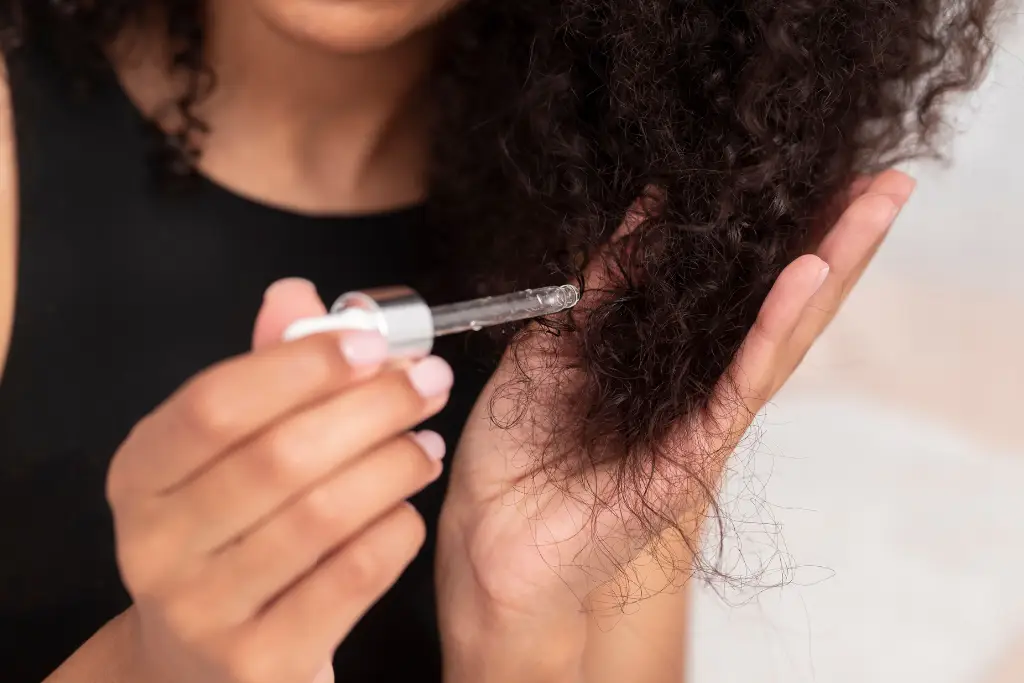
Curly hair comes with naturally lifted cuticles, leading to frizziness and hair breakage. The use of serum creates a seal on the hair cuticles while also forming a barrier that prevents moisture absorption, thus resulting in smoother strands. Such effects would be felt by people with naturally curly and coarse hair textures.
Serums with derivatives of shea butter, ceramides, or plant-derived compounds will work best for consumers in this category because they offer instant effects.
Color-Treated or Chemically Processed Hair
It is an emerging market among urban Indians, thanks to salons and do-it-yourself color boxes. For colored, bleached, and chemically processed hair, additional nourishment is required.
Hair serums containing protein such as keratin or silk protein, would suit this category. This category helps in restoring the damaged structure of the hair shaft caused by coloring and also prevents further damage or breakage.
Thinning or Hair-Loss-Prone Hair
Aspects such as age, stress, accumulation, and exposure could impact how the hair appears when emerging from the scalp. They contribute to the thinning, flattening, or weakening of the hair strands.
In the case of hair care serums targeting the scalp, there must be clinically proven active agents present. These could include clinically tested compounds such as Redensyl, Procapil, and Baicapil, known to enhance hair growth and prevent hair loss. Additionally, Ayurvedic ingredients such as gotu kola, moringa, and amla could complement these compounds in one formulation.
What Cosmetic Manufacturers Look for in a Scalable Serum Formula
As a brand owner assessing hair care product manufacturers or looking at white-label serums, this is what a good manufacturing partner must give you:
1) Stability-tested formula bases applicable for the different climatic regions of India
2) The ability to use both Ayurvedic active ingredients and science-based active ingredients
3) Realistic MOQ systems for new and emerging brands
4) GMP-certified manufacturing plant with detailed testing processes
5) Flexible packaging and ready-to-go SKUs
Hence, having a reliable private-label manufacturing company like Cizy Biocare chalks out the R&D responsibility and allows you to concentrate on what is important to you: creating your brand identity, your customers, and your distribution.
Final Words
The hair serum segment in India is rapidly expanding, the consumer is becoming more aware, and the winners will be those who know how to formulate properly.
If you’re interested in establishing a sustainable hair care brand, then the way forward is collaborating with a manufacturer who knows how to do it right. Establish your personal brand using Cizy Biocare. Contact us now for custom hair serum formulations.
FAQs
Q1) What is the minimum order quantity for white-label hair serums at Cizy Biocare?
MOQ changes according to the level of formula complexity and packaging needs. Cizy Biocare provides customized batch sizes ranging from 50 kgs to 1000 kgs that are ideal for both new companies and existing firms expanding their list of SKUs.
Q2) What should you avoid after applying hair serum?
Do not apply any other heavy product right after the serum is applied. At least give it 5 minutes to settle down to avoid steam formation due to the heating of the hair.
Q3) Which hair serum is best for all hair types?
Serums containing panthenol, hyaluronic acid, and biotin are generally effective for all hair types because they do not weigh down the hair. These hair serums should be formulated with water, which is ideal for both fine and thick hair.
Q4) How long does it take to launch a custom hair serum through Cizy Biocare?
Timelines vary based on product complexity, testing needs, and packaging requirements. An already formulated serum in our catalog may take less time than a completely customized formula. We will discuss a realistic timeline with you at your first consultation.
 7 mins read