About Us
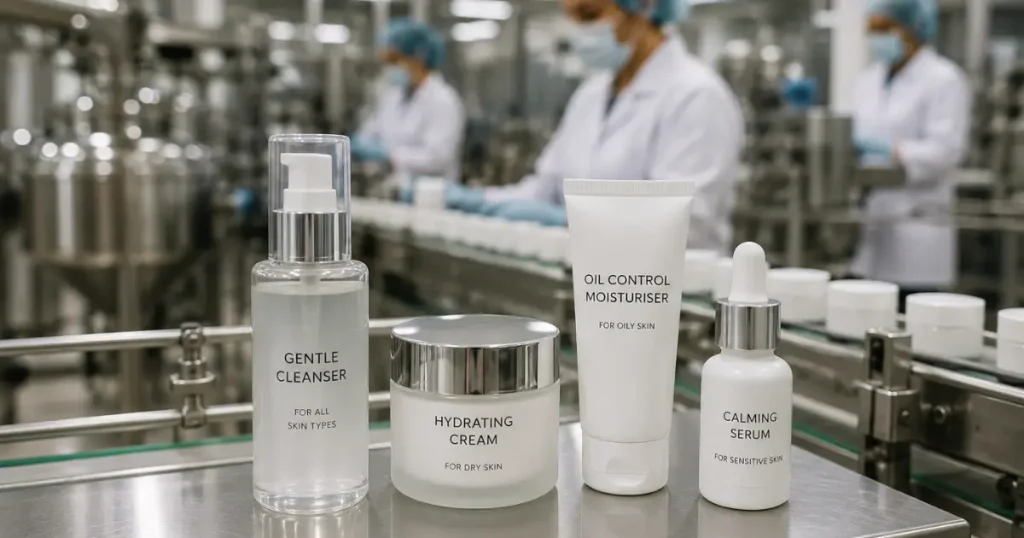
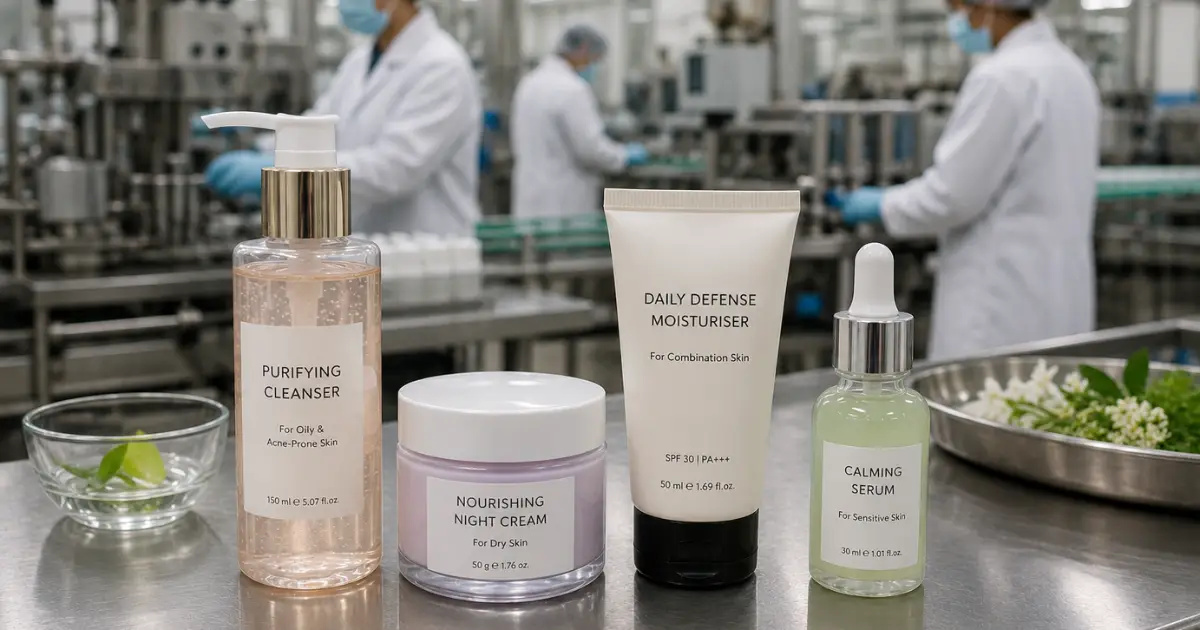
A skincare business idea often begins with one clear product goal. You may want to launch a face wash for oily skin, a rich moisturizer for dry skin, or a calming serum for sensitive skin.
The product idea is exciting. However, have you ever wondered how your manufacturers produce them? What goes into the formulation to develop skincare products for different skin types?
Well, business founders in Chandigarh and nearby regions are looking into the process and want to understand it better. In fact, the best cosmetic manufacturers in Chandigarh follow a set procedure to create safe and effective formulations.
So, are you wondering what this process could be? Well, we’re here to help. In this article, we share insights into the formulation of skincare products for different skin types.
In fact, the team at Cizy Biocare also follows this procedure to ensure you get the best quality beauty products from us.
Step 1: Start With the Customer’s Skin Type
Your formula cannot take shape until the manufacturer knows who will use it. Oily, dry, combination, normal, and sensitive skin do not respond to products in the same way.
Each skin type brings a different formulation need:
- Oily skin usually needs lightweight textures that do not feel greasy. The cleanser must remove excess oil without leaving the face tight, as harsh cleansing can make the skin feel uncomfortable.
- Dry skin often needs ingredients that attract water, improve softness, and reduce moisture loss. Rich lotions or creams may suit it better than thin gels.
- Combination skin requires balance. The product must hydrate dry areas without making the forehead, nose, or chin feel heavier.
- Sensitive skin needs careful active levels, mild cleansing agents, and suitable fragrance or preservative choices. A formula that feels normal to one customer may cause discomfort for another.
- Normal skin still needs a defined purpose. The formula may focus on everyday hydration, cleansing, protection, or skin maintenance.
This early assessment gives a skin care products manufacturer the foundation for every decision that follows. It also prevents you from creating a product that promises to suit everyone but serves no customer particularly well.
Once you know the target skin type, you can decide what the product should do for it.
Step 2: Decide What Product You Want to Launch
A skin concern alone does not complete the product idea. You also need to choose the right format.
A serum, face wash, moisturizer, toner, gel, sunscreen, and face cream each require a different formulation structure. A cleanser stays on the skin briefly and then rinses away. A serum or moisturizer remains on the face for several hours. That difference affects the ingredient base, concentration, texture, and preservative system.
You should clarify details such as:
- The main skin concern
- The age group you want to reach
- The preferred texture
- The desired finish
- The product price range
- The intended pack size
- The claims you want to make
Let’s say you want a niacinamide product for oily skin. And after careful consideration, you finalize that a lightweight serum may suit your customer better than a rich cream.
The same ingredient could enter a barrier-support moisturizer for dry skin, but the oils, humectants, and texture would need to change.
This is how skincare products for different skin types begin to gain a clear identity. Your product format connects the customer’s need with the experience your brand wants to offer.
The manufacturer can then move from a broad idea to a practical formulation brief.
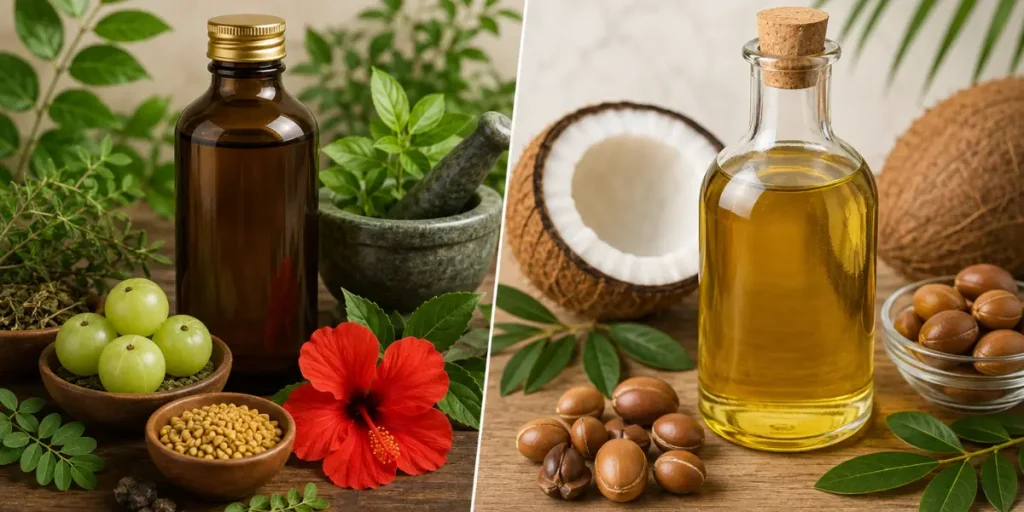
Step 3: Select Ingredients That Serve a Purpose
Ingredient trends can inspire a product idea, but trends cannot replace formulation logic.
A popular active may not suit every skin type, product base, or concentration. It must remain stable in the formula and work well with the other ingredients.
The formulator also needs to consider its pH requirements, solubility, texture, and intended benefit.
A complete skincare formula may contain:
- Actives that address the main concern
- Humectants that draw water towards the skin
- Emollients that improve softness and slip
- Occlusives that help reduce moisture loss
- Surfactants that cleanse oil and buildup
- Thickeners that create the desired consistency
- Preservatives that protect the formula from contamination
Ingredient sourcing matters here. The same ingredient name may appear across several supplier catalogs, but its purity, grade, documentation, and consistency may differ.
A capable skin care products manufacturer checks supplier records and raw material specifications before approving an ingredient. This gives you more confidence in what goes into the product making and how it may behave across repeated batches.
Therefore, the experts at Cizy Biocare assess both ingredient suitability and compatibility during this stage. The choice does not depend only on what sounds attractive on the label. It must support the skin type, product format, and brand position together.
Good ingredients provide the building blocks. The in-house lab then decides whether those blocks can work as one formula.
Step 4: Developing Formulations in the Lab
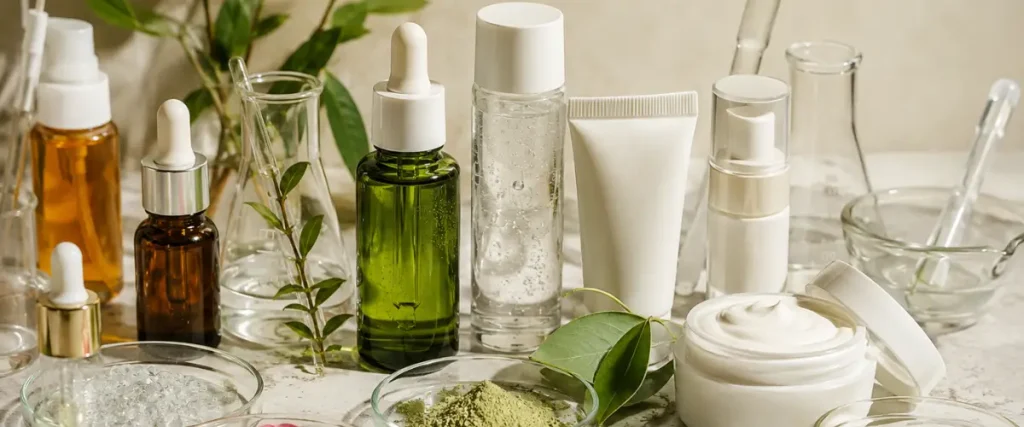
A list of ingredients is not yet a formula. The real work begins when the lab team combines them in exact ratios and follows a controlled method.
The first trial may not look or feel the way you imagined. A moisturizer may absorb too slowly. A serum may feel sticky. A face wash may create too much foam or leave the skin feeling dry.
The formulator studies each result and adjusts the next sample. Small changes in water, oils, emulsifiers, thickeners, or actives can affect the entire product.
The in-house lab usually reviews:
- pH level
- Texture and spread
- Absorption
- Foam and rinse feel
- Fragrance and color
- Viscosity
- Skin feel
- Ingredient compatibility
Your feedback also enters the process. You may want the cream to feel lighter, the serum to absorb faster, or the fragrance to become softer.
The formulation team balances that vision with safety and stability. In fact, if the formula does not come out right, it may backfire on your brand. For example, a silky cream does not mean anything if it loses its texture a few weeks down the line. Likewise, a strong active claim also creates risk when the concentration does not suit the target skin type.
The process followed at Cizy Biocare connects your brand idea with the technical work inside the lab. Our formulation experts refine the sample until its texture, purpose, and customer experience align more closely.
That approved sample still has one major test ahead. It must prove that it can remain safe and consistent over time.
Step 5: Check the Formula Before Production
A fresh sample may look perfect on the day it is made. Real products, however, face heat, cold, transport, storage, repeated opening, and contact with packaging.
Testing helps manufacturers identify problems before customers do.
The process may include:
- Stability checks for separation, odor, color, and texture changes
- pH checks across the testing period
- Microbial checks to assess the preservative system
- Packaging compatibility checks for leaks, reactions, or dispensing issues
- Pilot batch checks before large-scale production
Testing becomes especially important for skincare products for different skin types because a change in pH, texture, or active stability can affect both comfort and product performance.
Certifications also matter at this point. They show that the manufacturing facility follows defined processes for production, hygiene, documentation, and quality control.
Founders comparing cosmetic manufacturers in Chandigarh should ask what happens after sample approval. A low quote may appear attractive, but poor testing can lead to leaking packs, unstable formulas, customer complaints, and wasted inventory.
Cizy Biocare operates with an in-house quality lab and lists GMP, FDA, and AYUSH credentials across its official website.
A responsible skin care products manufacturer treats testing as part of formulation, not as paperwork added at the end.
Step 6: Match the Formula With Suitable Packaging
The product and its packaging must work together.
A thin serum may leak from a closure designed for thicker liquids. A rich cream may not move properly through a narrow pump. Light-sensitive ingredients may need opaque or dark packaging, while air-sensitive formulas may benefit from controlled dispensing.
Packaging checks may cover:
- Pump performance
- Cap and seal strength
- Product leakage
- Bottle or tube compatibility
- Label placement
- Ease of use
- Protection during transport
Your customer also shapes this decision. A glass jar may look premium, but it can feel heavy during travel. An airless pump may support cleaner use, but it can also affect the final cost.
Experienced cosmetic manufacturers in Chandigarh should help you assess more than appearance. The chosen pack must protect the formula and fit the way customers will use it.
Once the formula and packaging work together, the product can move beyond the lab.
Step 7: Prepare the Formula for Commercial Production
A small lab batch does not automatically behave the same way in a large manufacturing vessel.
Equipment size, mixing speed, heating, cooling, and ingredient order can change the product. Scale-up helps the manufacturing team maintain the texture, color, fragrance, and performance approved during sampling.
A pilot or controlled batch may confirm:
- Batch consistency
- Final pH
- Viscosity
- Filling behavior
- Packaging performance
- Product appearance
This stage protects the experience you approved. Your customer should receive the same product across the first batch and every later order.
A dependable skin care products manufacturer manages this transition carefully. The team records production details, checks the finished batch, fills the approved packaging, and completes labeling before dispatch.
Beauty founders reviewing cosmetic manufacturers in Chandigarh should ask how the manufacturer handles scale-up and repeated production. A good sample matters, but long-term consistency builds customer trust.
How Cizy Biocare Supports Your Skincare Business
A new beauty founder already has several decisions to manage. Separate vendors for formulation, ingredients, testing, packaging, and production can make the journey slower and harder to control.
Cizy Biocare brings these stages into one connected process. Our support includes:
- In-house formulation and sample development
- Ingredient sourcing through suitable channels
- Custom products based on skin type and concern
- Quality checks before production
- Packaging and labeling assistance
- GMP, FDA, and AYUSH-backed compliance
- Private-label and third-party manufacturing
- Production support as your brand grows
Cizy Biocare has worked in beauty and wellness manufacturing since 1997. The company states that it has supported more than 200 clients and developed over 100 approved formulations.
You still remain close to the idea. Our experts help you understand what is practical, where the formula needs refinement, and how each decision can affect the final product.
Founders looking for cosmetic manufacturers in Chandigarh need this clarity before committing to production. The right partnership should help you move forward with fewer gaps between your vision and the product that reaches the shelf.
Wrapping It All Up!
Any cosmetic product begins with three things: your vision, the product format, and the ingredients that support it. Before you approach a manufacturer, be clear about what you want the product to do, how it should feel, and who will use it.
A face wash, serum, cream, or lotion cannot take shape from a vague idea. The clearer your direction, the easier it becomes to choose the right texture, actives, packaging, and testing process.
So, start with the basics. Then work with a manufacturer who can turn those decisions into a stable, practical formula
 10 mins read