About Us
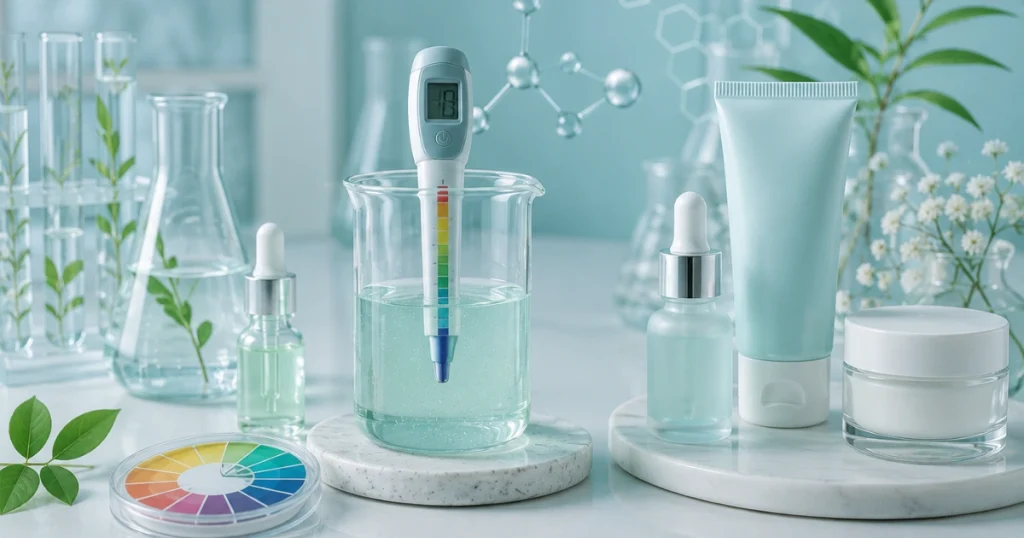
The formulation process for skin care products involves many factors. Ratios of ingredients, texture, active ingredients, preservatives, and packaging all require consideration. However, there is one factor that underlies all of these and quietly influences their efficacy.
This factor is pH.
pH in skincare products plays a very important role in their efficacy. For instance, a serum with proper active ingredients but an incorrect pH level will not work effectively. The same applies to a moisturizer whose pH level fluctuates since it may not preserve the product. Moreover, an overly alkaline cleanser will weaken the skin barrier during every application.
Thus, they take the pain and make sure the appropriate pH is maintained in the beauty products. It is a gradual process, not just a one-time thing.
Keep reading to know how it is done.
What Can Go Wrong When pH Is Off
The skin’s natural pH sits between 4.5 and 5.5. This slightly acidic environment keeps the barrier intact, retains moisture, and prevents harmful microorganisms from taking hold. When a skincare product sits outside this range, the skin notices.
Consumers notice it too, even if they cannot name the reason. Unexpected irritation, a product that stops working after a few weeks, or a formula that separates before its expiry date are all signs that pH was not managed well during manufacturing.
The stakes are just as high on the production side. Skincare product manufacturers deal with pH-related consequences that go beyond consumer experience:
- Actives like Vitamin C and AHAs lose their efficacy when pH drifts even slightly outside their functional range.
- Preservative systems fail outside a narrow pH window, turning a safe formula into a contamination risk.
- Emulsions become unstable, affecting texture, appearance, and shelf life.
- Regulatory and safety compliance becomes harder to demonstrate when pH is inconsistent across batches.
A single variable managed poorly at any stage of production has the ability to compromise an entire product line, and that is a risk no serious cosmetic manufacturer can afford to take lightly.
Common Challenges Cosmetic Manufacturers Face
pH is not static. It shifts when ingredients are combined, when temperature changes, and when a formula sits in storage over time.
- Each active ingredient, such as niacinamide, retinol, and ascorbic acid, needs to operate at a certain pH range, and it is critical to sequence each of them for compatibility.
- The natural botanical extracts also have their pH levels, and if they are not considered in the formulation process, there will be pH imbalances.
- It is important to note that preservatives need a certain pH range to operate effectively.
These are not problems that get solved once. They get managed consistently, batch after batch.
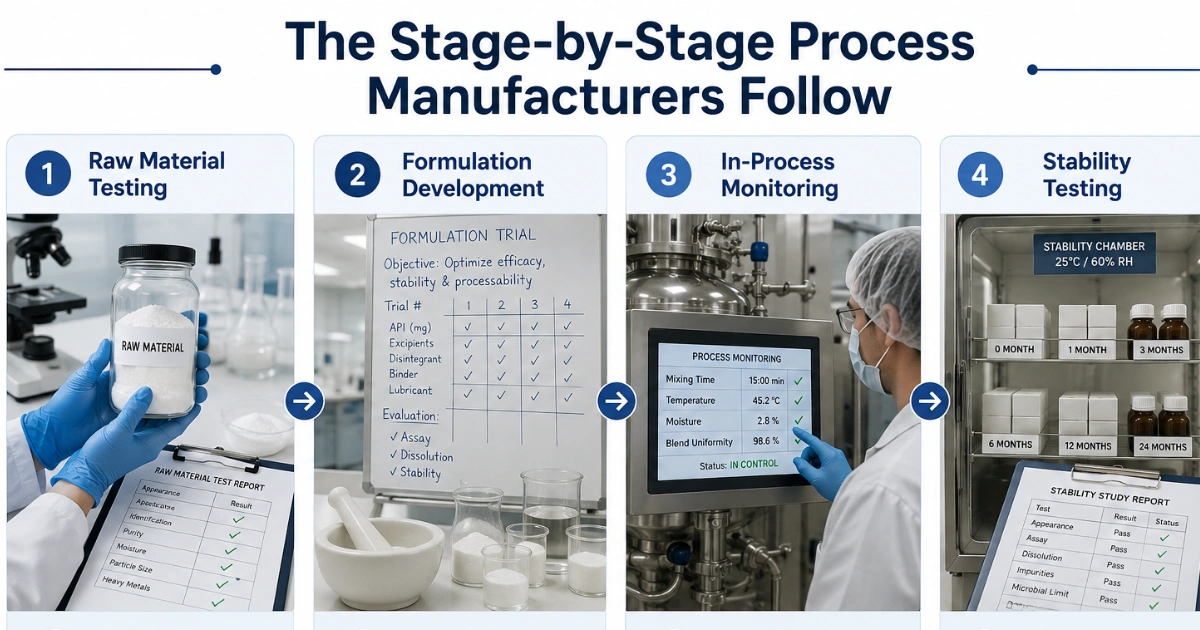
The Stage-by-Stage Process Manufacturers Follow
Maintaining the right pH in skincare products does not happen at one point in production.
It is something cosmetic manufacturers work on across every stage, from the moment raw materials arrive to the moment a finished batch is cleared for dispatch.
Raw Material Testing
Everything starts here. Before any ingredient enters the production floor, it is tested for pH.
Water is checked separately because it makes up the largest portion of most skincare formulas, and its quality directly affects the final product.
Any raw material that does not meet the accepted pH range is held back before it can cause problems further down the line.
Formulation Development
Here is when the desired pH value of each product is set. Skincare products have formulators who define the appropriate pH range, depending on several considerations, which include:
- actives used
- The benefits the skin should obtain from the product
- preservation system to ensure safety.
They use Ingredients like citric acid or sodium hydroxide to balance the formula. Formulators do not leave anything to be adjusted later. At Cizy Biocare, we set these benchmarks during development so every batch produced after has a clear and defined target to meet.
In-Process Monitoring
Cosmetic manufacturers monitor pH levels at multiple points as the formula comes together. They use two main methods to do this:
- The pH meter is considered the most precise device. A digital sensor is lowered straight into the solution and provides an accurate measurement in seconds. Most production lines use these meters on a daily basis to ensure that measurements remain consistent.
- pH strips are used for quick checks at different stages. They are not as precise as meters but give a fast indication of whether the formula is within the acceptable range before a more detailed check is done.
Experts take readings after the water phase, after actives are added, and before the batch moves to filling. This step-by-step monitoring makes it easy to catch any drift while the batch is still in progress. Finding a pH problem after a batch is complete is a much harder and costlier situation to fix for skincare products manufacturers and the brands working with them.
Stability Testing
Once a formula is ready, it goes through stability testing across different temperature and humidity conditions.
This confirms that pH holds over the product’s full shelf life and does not drift in ways that affect safety or performance.
A product that clears stability testing gives brand owners real confidence in what they are putting out.
How Quality Systems Keep pH Consistent?
Maintaining pH uniformity within one batch of a product is an aspect of formulation, but maintaining pH uniformity throughout batches indicates a quality system. And this is where GMP-certified facilities hold a clear advantage.
GMP protocols require cosmetic manufacturers to document pH testing at every defined stage of production. These are not informal checks. They are recorded, reviewed, and stored as part of the batch record. Before any batch moves to filling, it must meet the accepted pH criteria. If it does not, the batch goes into review. Manufacturers do not approve it and move on.
This system does three things for brand owners:
- It removes the dependence on individual judgment and replaces it with a defined, repeatable process.
- It creates a paper trail that supports regulatory compliance and quality audits.
- It gives brands consistent output, batch after batch, without having to monitor the process themselves.
Cosmetic manufacturers with strong quality systems do not just deliver a good product. They deliver the same good product every single time.
Why Brands Trust Cizy Biocare for pH-Accurate Skincare Manufacturing
pH management is one of the clearest indicators of how seriously a manufacturer takes formulation quality. At Cizy Biocare, we treat it as a non-negotiable across every product we develop.
Our process covers every stage, from raw material testing to stability sign-off. Nothing moves forward without meeting the defined pH criteria. Brand owners who work with us get:
- 28 plus years of formulation experience across skincare, haircare, and herbal categories.
- GMP, FDA, and AYUSH certified manufacturing.
- Stability-tested formulations that perform consistently from the first batch to the hundredth.
So, if you are looking for a manufacturing partner who gets the details right, explore our manufacturing services.
Final Thoughts
pH in skincare products is not a background detail. It is what holds a formulation together, keeps it safe, and makes it perform the way it should.
Skincare product manufacturers who manage it well deliver products that brands can stand behind confidently. Those who do not create problems that show up long after the batch has shipped.
The process matters, and so does the partner you choose to trust with it.
Frequently Asked Questions
Q1. What is the ideal pH range for skincare products?
The most effective pH range for most cosmetic products falls within the range of 4.5 to 6.5. This is because this pH range falls within that of the skin, meaning that the active ingredients and preservatives will be able to function effectively.
Q2. Why do cosmetic manufacturers test pH at multiple stages of production?
This is due to the fact that pH is very sensitive to varying environments. For instance, pH might alter when combining ingredients or altering temperatures. That is why cosmetic manufacturers carry out tests during several stages so as to be able to detect any variation during production and make corrections.
Q3. How do manufacturers test pH during production?
They use two main tools. Calibrated digital pH meters give precise readings, and pH strips work for quick interim checks. Experts take readings after the water phase, after actives addition, and before the batch moves to filling.
Q4. What happens if pH is off in a finished skincare product?
A great deal, in fact. The active ingredients become less effective, preservatives cease to function, and consumers will have an irritating sensation or observe premature degradation of the product.
Q5. How does pH affect preservatives in skincare formulations?
Preservatives only work within a specific pH range. When pH drifts outside that window, they lose their ability to protect the formula from microbial contamination. This is why cosmetic manufacturers treat preservative and pH alignment as a safety requirement, not just a formulation preference.
 8 mins read