About Us

Ayurvedic skin care practices date back to the ancient days in India. Today, it has become a huge market and a wonderful opportunity for a new business.
The demand for natural skin care is on the rise, and people are willing to pay more for quality. But none of that matters if the numbers do not add up. Understanding the economics early helps you decide what to launch, how to launch, and how much room you have to grow without stress.
As ayurvedic skin care products manufacturers in India, we see many founders focus on branding and ingredients first. The brands that move forward successfully are the ones that understand costs, margins, and timelines from day one.
1. How is the Ayurvedic Skincare Market a Viable Opportunity?
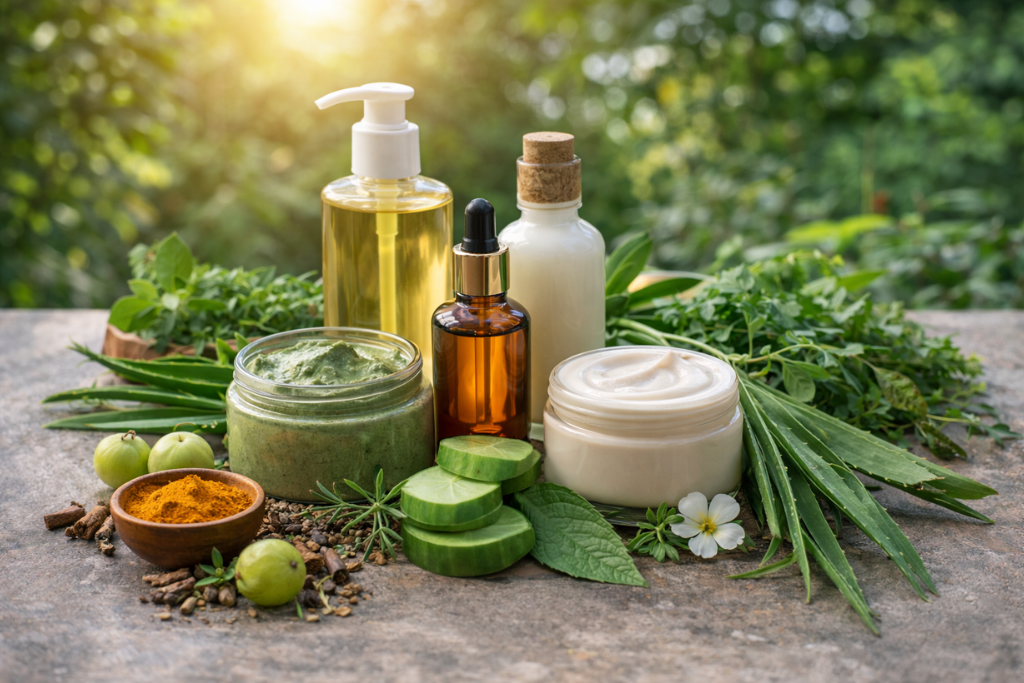
The Ayurvedic skin care market in India is growing faster than many other personal care categories. The focus on herbal and plant-based skin care products has become mainstream. The demand for skin care products that have a purpose and are made from safer ingredients has increased.
For start-up founders, this is a great opportunity as well as competition. New brands are entering the market regularly. What differentiates a successful brand from a short lived brand is how well the business is planned and executed. Strong economics give you flexibility to refine products, improve packaging, and invest in marketing without constantly cutting corners.
2. The Real Startup Investment
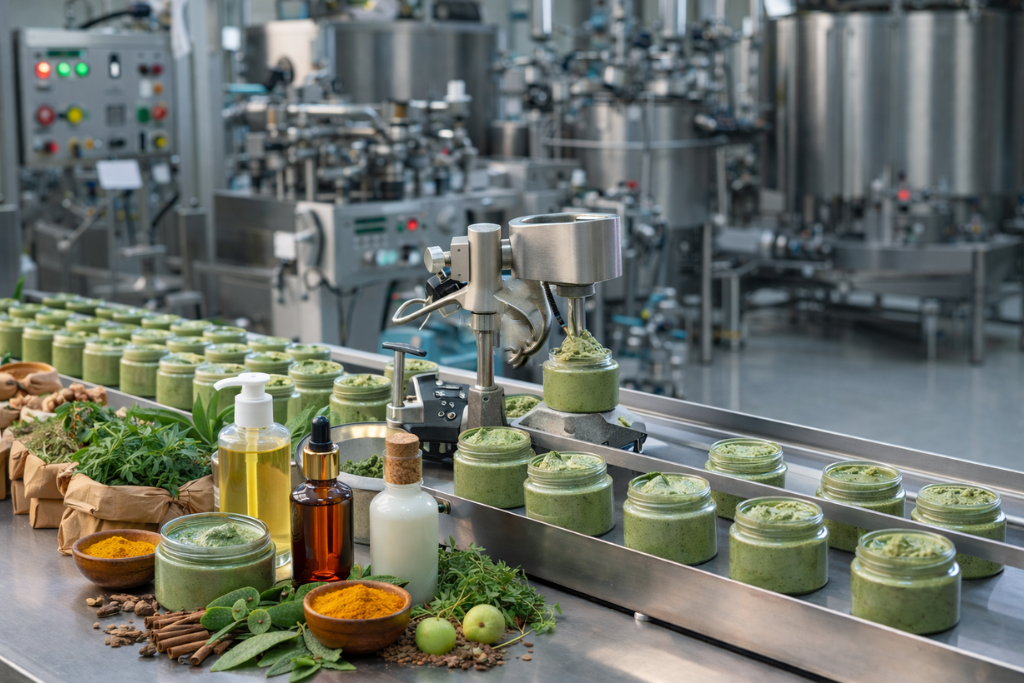
One of the advantages of starting an Ayurvedic skincare brand is that you do not need massive capital to begin. The total investment depends largely on your manufacturing route and how focused your first launch is.
Private label manufacturing as a starting point
Private label manufacturing allows you to launch products using ready formulations that have already been tested and approved. You brand them under your own name and choose packaging formats that fit your positioning.
This route works well when:
- You want to enter the market quickly
- You want to test customer response
- You want to keep early costs under control
For most skincare products, production costs through private label typically range between ₹80 and ₹150 per unit depending on formulation type and packaging choice. With minimum quantities usually starting from 500 to 1000 units, a single product launch can often be managed within ₹1.5 to ₹3 lakhs.
Many founders begin with one or two products rather than a full range. This reduces inventory pressure and gives clarity on what customers actually want.
Custom formulation and its financial impact
Custom formulation allows deeper differentiation but comes with higher costs. You pay for research, trials, testing, and usually higher minimum order quantities.
This route makes sense when:
- You already understand your customer well
- You want unique textures or ingredient combinations
- You are planning a premium or specialised range
Per unit costs for custom products are higher, and additional expenses such as stability testing and documentation must be factored in. For early-stage brands, this approach works best after initial market validation.
3. Packaging and branding costs founders underestimate
Packaging is one of the most common budget leaks. Custom bottles, caps, or cartons look attractive but increase both cost and lead time.
A practical approach for the first launch includes:
- Using standard bottles or jars with quality finishes
- Investing in a clean label design rather than custom moulds
- Limiting colour variations
Branding and packaging design typically costs between ₹30,000 and ₹1,00,000 depending on scope. This is one area where thoughtful design often delivers better results than expensive materials.
4. Compliance and regulatory expenses
Regulatory requirements are unavoidable and should be planned for early. It is mandatory that the ayurvedic skin care products meet the regulatory requirements on licensability and testing in India.
Costs usually include:
- Product testing
- Documentation and certifications
- Label compliance
Working with established ayurvedic products manufacturers in India simplifies this process significantly. Manufacturers with existing approvals help reduce both cost and delays, especially for founders unfamiliar with compliance procedures.
5. The profit side of Ayurvedic skincare
Skincare products generally offer healthy margins when priced correctly. Manufacturing costs remain manageable, while perceived value allows premium pricing when the brand story is clear.
For instance, a product with a landed cost of around ₹130 to ₹200 will easily retail between ₹499 to ₹899, positioning-wise. Business models which cater to consumers directly will let you take higher margins, as you can dictate prices as well as consumer communications yourself.
The wholesalers and retailers help with volume, but they have to share margins. Most brands start by e-commerce and once the market is steady, shift towards retailing.
6. How sales channels affect your economics
The choice of sales method determines the rate at which costs are recovered.
Direct to Consumer marketing offers:
- Better margins
- Faster feedback
- Stronger brand control
Retail channels offer:
- Wider reach
- Physical visibility
- Higher volume potential
It is a common trend for many Ayurvedic brands that begin by adopting a hybrid model where the company is first established on the internet before finally deciding on selective retailing.
7. Cost control through operational decisions
Beyond manufacturing, profitability depends on everyday choices.
Some examples:
- Managing content and social media in-house initially
- Using small influencer collaborations instead of large campaigns
- Testing products with sample sizes
Operational efficiency often determines whether a brand survives its first year.
8. A practical launch scenario
Consider a single Ayurvedic face serum launched through private label manufacturing.
Approximate costs:
- Manufacturing per unit: ₹180
- Packaging and labeling: ₹40
- Handling and logistics: ₹20
Total landed cost: ₹240
If sold at ₹899 through your own website, the margin allows room for marketing, platform fees, and reinvestment. With consistent sales of a few hundred units per month, initial setup costs can be recovered within the first year.
Adding a complementary product later increases average order value and improves long-term sustainability.
9. What We Do at Cizy Biocare for Cost-Effective Launches
At Cizy Biocare, we get to work with entrepreneurs who look for simplicity and not complexity. As ayurvedic skin care products manufacturers in India, our focus is on helping brands understand what is necessary now and what can wait.
We support you with:
- Clear cost breakdowns
- Realistic batch planning
- Guidance on packaging choices
- Manufacturing routes that match your budget stage
This approach helps you launch confidently without locking funds into decisions you cannot reverse easily.
10. Takeaway
The economics of setting up an Ayurvedic skincare brand are favourable when the decisions made are practical and grounded. Success comes from understanding where money is spent, choosing the right manufacturing route, and upscaling step by step.
With the right planning and the right manufacturing partner, a focused launch can grow into a strong brand presence. At Cizy Biocare, we believe a sound economic model fosters better products and a sustainable business model.

Cizybiocare
Founder, Cizybiocare
Japarsh Singh draws on decades of expertise in cosmetics and Ayurveda, combining traditional knowledge with modern innovation to deliver ethical, high-quality products for global beauty and wellness brands.


 1 min read